-
Courses

Courses
Choosing a course is one of the most important decisions you'll ever make! View our courses and see what our students and lecturers have to say about the courses you are interested in at the links below.
-
University Life

University Life
Each year more than 4,000 choose University of Galway as their University of choice. Find out what life at University of Galway is all about here.
-
About University of Galway

About University of Galway
Since 1845, University of Galway has been sharing the highest quality teaching and research with Ireland and the world. Find out what makes our University so special – from our distinguished history to the latest news and campus developments.
-
Colleges & Schools

Colleges & Schools
University of Galway has earned international recognition as a research-led university with a commitment to top quality teaching across a range of key areas of expertise.
-
Research & Innovation

Research & Innovation
University of Galway’s vibrant research community take on some of the most pressing challenges of our times.
-
Business & Industry
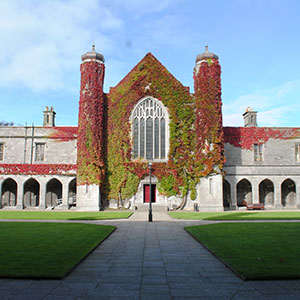
Guiding Breakthrough Research at University of Galway
We explore and facilitate commercial opportunities for the research community at University of Galway, as well as facilitating industry partnership.
-
Alumni & Friends

Alumni & Friends
There are 128,000 University of Galway alumni worldwide. Stay connected to your alumni community! Join our social networks and update your details online.
-
Community Engagement
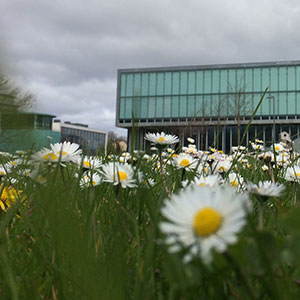
Community Engagement
At University of Galway, we believe that the best learning takes place when you apply what you learn in a real world context. That's why many of our courses include work placements or community projects.








Family Support Studies (MA, PDip)
MA/Postgraduate Diploma (Family Support Studies)

Course Overview
The main focus of Family Support is on early intervention and prevention in order to promote and protect the health, well-being and rights of all children, young people and their families, paying particular attention to those who are vulnerable or at risk.
This programme aims to enhance the education and skills of professionals working in the field. The programme enables students to develop in-depth understanding of social problems, their causes and policy solutions. It provides a strong foundation in family support theory and its application across a range of practices, roles and disciplines in the human services, as well as practical social science research and evaluation skills required in the sector.

Pictured: Students and lecturers from the MA in Family Support Studies visiting the European Parliament during a class field trip to Brussels, Belgium.
Established in 2003, this programme is the only one of its kind in Europe with an emphasis on applying a Family Support orientation across a wide range of practice and policy arenas.
Scholarships available
Find out about our Postgraduate Scholarships here.
Applications and Selections
Applications are made online via the University of Galway Postgraduate Applications System.
Who Teaches this Course

BA, MA. PhD
Lecturer Above The Bar UNESCO
Political Science & Sociology
University of Galway
View Profile



B.Sc., MA, PhD
Senior Lecturer School of Political Science
& Sociology
University of Galway
View Profile


B.S.S., CQSW, Ph.D., PGCHET
Professor of Political Science and Sociology- Social Work Room 1001, ILAS
Child and Family Research Centre
School of Political Science and Sociology
View Profile
Requirements and Assessment
Assessment of candidates is on a continuous basis, varies from module to module and involves a combination of essays, project work, and written assignments. Central to students’ assessment is their ‘on site’ placement and associated practice and their Year Two research project (minor dissertation).
Key Facts
Entry Requirements
A third-level qualification or a recognised professional qualification in a field broadly related to Family Support service delivery. Participants must have a minimum of one year work experience in health or and social services areas. Applicants with relevant professional experience who do not meet the formal qualifications requirement may be considered for entry into the PDip in the first instance.
Additional Requirements
Recognition of Prior Learning (RPL)
Applicants with relevant professional experience who do not meet the formal qualifications requirement may be considered for entry into the PDip in the first instance.
Duration
MA: Two years, part-time
PDip: One year, part-time
Next start date
September 2024
A Level Grades ()
Average intake
25
QQI/FET FETAC Entry Routes
Closing Date
Please view the offer rounds website.
NFQ level
Mode of study
ECTS weighting
90
Award
CAO
Course code
MA-FS (MA); PGD-FS (PDip)
Course Outline
PROSPECTIVE STUDENTS
This is a two-year part-time programme. Students attend college one to two days every second week over four semesters with the agreement of their employers. Established in 2003, this programme is unique in Europe with its emphasis on applying a family support approach across a wide range of social practice and policy areas.
YEAR ONE (45 CREDITS)
• Family Support Theory I
• Family Support Practice I
• Families and Children in Society and Policy I
• Working with Specific Populations
• Child Protection and Family Support
• Community Development and Families
• Family Support Practice Seminars
• Dissertation Workshops
YEAR TWO (45 CREDITS)
• Family Support Theory II
• Family Support Practice II
• Families and Children in Society and Policy II
• Law and Family Support
• Health Promotion and Families
• Social Science Research DissertationCurriculum Information
Curriculum information relates to the current academic year (in most cases).Course and module offerings and details may be subject to change.
Glossary of Terms
- Credits
- You must earn a defined number of credits (aka ECTS) to complete each year of your course. You do this by taking all of its required modules as well as the correct number of optional modules to obtain that year's total number of credits.
- Module
- An examinable portion of a subject or course, for which you attend lectures and/or tutorials and carry out assignments. E.g. Algebra and Calculus could be modules within the subject Mathematics. Each module has a unique module code eg. MA140.
- Optional
- A module you may choose to study.
- Required
- A module that you must study if you choose this course (or subject).
- Semester
- Most courses have 2 semesters (aka terms) per year.
Year 1 (45 Credits)
Required SP576: Child Protection and Family Support
SP576: Child Protection and Family Support
Semester 1 | Credits: 5
Assessments
- Continuous Assessment (100%)
Teachers
- CARMEL DEVANEY:
Research Profile |
Email
- GILLIAN BROWNE:
Research Profile |
Email
- FERGAL LANDY:
Research Profile |
Email
- EAMONN FUREY:
Research Profile |
Email
Note: Module offerings and details may be subject to change.
Required SP577: Community Development and Families
SP577: Community Development and Families
Semester 2 | Credits: 5
(Language of instruction: English)
Assessments
- Continuous Assessment (100%)
Teachers
- NUALA DONOHUE:
Research Profile |
Email
- BRIAN MCGRATH:
Research Profile |
Email
- CARMEL DEVANEY:
Research Profile |
Email
- GILLIAN BROWNE:
Research Profile |
Email
- DANIELLE KENNAN:
Research Profile |
Email
Note: Module offerings and details may be subject to change.
Required SP574: Families and Children in Society and Policy I
SP574: Families and Children in Society and Policy I
Semester 1 and Semester 2 | Credits: 5
(Language of instruction: English)
Learning Outcomes
- Participants understand key theoretical frameworks and concepts for thinking about families, children and young people
- Participants can effectively analyse and reflect on key issues in family life for children, young people and parents
- Participants are aware of and able to analyse key policies relevant to children, youth and families
Assessments
- Continuous Assessment (100%)
Teachers
- JOHN CANAVAN:
Research Profile |
Email
- CARMEL DEVANEY:
Research Profile |
Email
- GILLIAN BROWNE:
Research Profile |
Email
Note: Module offerings and details may be subject to change.
Required SP6155: Research Methods for the Applied Social Science
SP6155: Research Methods for the Applied Social Science
Semester 2 | Credits: 5
This module aims to give students a solid grounding in research methods. The topics covered include definitions of research, argument and logic, sources of information, tools for information searches, theory and practice of basic qualitative and quantitative research methods. The module will be conducted in a lecture format with recommended preparatory readings and practical exercises.
Learning Outcomes
- Identify research questions and design appropriate research strategies for specific political and/or social issues.
- Assess the applicability of qualitative and/or quantitative methods to specific research questions.
- Arrange and construct the research process from posing a research question to analysing the collected data.
- Review and critically evaluate social science research methods and methodologies.
Assessments
- Continuous Assessment (100%)
Teachers
- NUALA DONOHUE:
Research Profile |
Email
- JACQUELINE MURPHY:
Research Profile |
Email
- CARMEL DEVANEY:
Research Profile |
Email
- GILLIAN BROWNE:
Research Profile |
Email
- Fran Smith:
Research Profile |
Email
Reading List
- "Social Research Methods" by Bryman, A.,
Publisher: Oxford - "Introducing Social Research Methods" by Ruane, Janet M
Publisher: Wiley - "The SAGE Handbook of Applied Social Research Methods" by Bickman, Leonard & Rog, Debra J
Publisher: Sage - "Interpretation and method : empirical research methods and the interpretive turn" by Yanow et al
Publisher: Routledge
Note: Module offerings and details may be subject to change.
Required SP6129: Applied Family Support Seminars
SP6129: Applied Family Support Seminars
Semester 2 | Credits: 5
This module explores example of Family Support in Practice across a number of different areas. This includes individual work, group work, family work and parenting support.
Learning Outcomes
- Students will consider the transferable skills in Family Support across a number of different contexts
- Students will become familiar with the challenges associated with delivery Family Support in practice
- Students will reflect on the impact of family Support across a number of contexts
Assessments
- Continuous Assessment (100%)
Teachers
- CARMEL DEVANEY:
Research Profile |
Email
- GILLIAN BROWNE:
Research Profile |
Email
Note: Module offerings and details may be subject to change.
Required SP572: Family Support Theory I
SP572: Family Support Theory I
Semester 2 | Credits: 5
Assessments
- Continuous Assessment (100%)
Teachers
- BERNADINE BRADY:
Research Profile |
Email
- CARMEL DEVANEY:
Research Profile |
Email
- GILLIAN BROWNE:
Research Profile |
Email
Note: Module offerings and details may be subject to change.
Required SP573: Family Support Practice I
SP573: Family Support Practice I
Semester 2 | Credits: 10
Assessments
- Continuous Assessment (100%)
Teachers
- BERNADINE BRADY:
Research Profile |
Email
- CARMEL DEVANEY:
Research Profile |
Email
- GILLIAN BROWNE:
Research Profile |
Email
Note: Module offerings and details may be subject to change.
Required SP530: Working with Specific Populations
SP530: Working with Specific Populations
Semester 2 | Credits: 5
Assessments
- Continuous Assessment (100%)
Teachers
- BRIAN MCGRATH:
Research Profile |
Email
- BERNADINE BRADY:
Research Profile |
Email
- CARMEL DEVANEY:
Research Profile |
Email
- GILLIAN BROWNE:
Research Profile |
Email
Note: Module offerings and details may be subject to change.
Optional SP6124: Dissertation Workshops
SP6124: Dissertation Workshops
Semester 1 and Semester 2 | Credits: 5
This module provides the opportunity for students to engage in a series of workshops relevant to the development of their dissertations. The workshops are led by academic staff with diverse and varied research experience. The workshop topics include academic writing, critical thinking, and the development of a research proposal, along with workshops focused on specific fields of research.
(Language of instruction: English)
Learning Outcomes
- Design research study.
- Identify and critically analyse arguments.
- Communicate clearly and effectively in writing and orally.
- Prepare for and engage in workshops on these topics.
- Complete projects that are well presented, based on independent research, correctly referenced, and cogently argued.
Assessments
- Continuous Assessment (70%)
- Oral, Audio Visual or Practical Assessment (30%)
Teachers
- CARMEL DEVANEY:
Research Profile |
Email
- GILLIAN BROWNE:
Research Profile |
Email
- Caroline Owens:
Research Profile |
Email
Reading List
- "Principles of biomedical ethics" by Beauchamp, Tom L. and James F. Childress
Publisher: Oxford University Press - "Qualitative research methods for the social sciences" by Bruce Berg
Publisher: Pearson - "Ethical argument" by Hugh Mercer Cutler
Publisher: Oxford University Press
Note: Module offerings and details may be subject to change.
Year 2 (45 Credits)
Required SP6153: Research Support Workshop
SP6153: Research Support Workshop
Semester 1 and Semester 2 | Credits: 5
This module aims to support student gain independent research skills. Students have opportunities to participate in a range of workshops relevant to the development of their dissertation or research project. Possible workshop topics include academic writing, critical thinking, literature review, methods selection, working with primary sources, community based research, and the development of a research proposal, along with workshops focused on specific fields of research.
(Language of instruction: English)
Learning Outcomes
- Prepare a research/project proposal consistent with postgraduate standards.
- Communicate clear rationales for each element of a research study design.
- Produce a competent review of literature and/or resources relevant to their research project.
- Complete a project that is well presented, based on independent research, correctly referenced, and cogently argued.
Assessments
- Continuous Assessment (100%)
Teachers
- CAROLINE MCGREGOR:
Research Profile |
Email
- JACQUELINE MURPHY:
Research Profile |
Email
- CARMEL DEVANEY:
Research Profile |
Email
- GILLIAN BROWNE:
Research Profile |
Email
- Stephanie Quinn:
Research Profile |
Email
Reading List
- "Social Research Methods" by Bryman, A
Publisher: Oxford - "Introducing Social Research Methods" by Ruane, Janet M
Publisher: Wiley - "The SAGE Handbook of Applied Social Research Methods" by Bickman, Leonard & Rog, Debra J
Publisher: Sage - "Interpretation and method : empirical research methods and the interpretive turn" by Yanow et al.
Publisher: Routledge
Note: Module offerings and details may be subject to change.
Required SP6154: Family Support Dissertation
SP6154: Family Support Dissertation
Semester 1 and Semester 2 | Credits: 15
The dissertation/final research project module shall enable the student to acquire the knowledge, comprehension, abilities and perspectives needed for conducting independent research. The module will allow the student to work under supervision while developing their writing, research, analytical skills and completing a research dissertation/final research project or research portfolio. The overall goal is for the student to display the knowledge and capability for independent work at postgraduate level.
(Language of instruction: English)
Learning Outcomes
- Identify a critical research problem and translate this into a well-designed, applied and academic project of investigation and understanding.
- Acquire a thorough understanding of the chosen subject area and the wider theoretical, policy and practice literature within which the subject is framed.
- Demonstrate an ability to organise, collate, critically assess and interpret data.
- Demonstrate a capacity to effectively communicate new knowledge in a social scientific manner.
Assessments
- Continuous Assessment (100%)
Teachers
- NUALA DONOHUE:
Research Profile |
Email
- CARMEL BROWNE:
Research Profile |
Email
- JACQUELINE MURPHY:
Research Profile |
Email
- CARMEL DEVANEY:
Research Profile |
Email
- GILLIAN BROWNE:
Research Profile |
Email
Note: Module offerings and details may be subject to change.
Required SP579: Family Support Theory II
SP579: Family Support Theory II
Semester 2 | Credits: 5
Assessments
- Continuous Assessment (100%)
Teachers
- BERNADINE BRADY:
Research Profile |
Email
- CARMEL DEVANEY:
Research Profile |
Email
- GILLIAN BROWNE:
Research Profile |
Email
Note: Module offerings and details may be subject to change.
Required SP580: Family Support Practice II
SP580: Family Support Practice II
Semester 2 | Credits: 5
Assessments
- Continuous Assessment (100%)
Teachers
- BERNADINE BRADY:
Research Profile |
Email
- CARMEL DEVANEY:
Research Profile |
Email
- GILLIAN BROWNE:
Research Profile |
Email
Note: Module offerings and details may be subject to change.
Required SP582: Law and Family Support
SP582: Law and Family Support
Semester 2 | Credits: 5
Assessments
- Continuous Assessment (100%)
Teachers
- CARMEL DEVANEY:
Research Profile |
Email
- GILLIAN BROWNE:
Research Profile |
Email
Note: Module offerings and details may be subject to change.
Required SP583: Health Promotion and Families
SP583: Health Promotion and Families
Semester 2 | Credits: 5
Assessments
- Continuous Assessment (100%)
Teachers
- BERNADINE BRADY:
Research Profile |
Email
- CARMEL DEVANEY:
Research Profile |
Email
- GILLIAN BROWNE:
Research Profile |
Email
- COLETTE DEMPSEY:
Research Profile |
Email
- LHARA MULLINS:
Research Profile |
Email
Note: Module offerings and details may be subject to change.
Optional SP584: Thesis Research Seminars
SP584: Thesis Research Seminars
Semester 2 | Credits: 20
Assessments
- Research (100%)
Teachers
- BERNADINE BRADY:
Research Profile |
Email
- CARMEL DEVANEY:
Research Profile |
Email
- GILLIAN BROWNE:
Research Profile |
Email
Note: Module offerings and details may be subject to change.
Optional SP581: Families and Children in Society and Policy II
SP581: Families and Children in Society and Policy II
Semester 2 | Credits: 5
Assessments
- Continuous Assessment (100%)
Teachers
- JOHN CANAVAN:
Research Profile |
Email
- CARMEL DEVANEY:
Research Profile |
Email
- GILLIAN BROWNE:
Research Profile |
Email
Note: Module offerings and details may be subject to change.
Why Choose This Course?
Career Opportunities
Graduates of the PDip/MA in Family Support Studies will have enhanced career prospects in a wide range of service areas, at practitioner and manager level, working in state and voluntary services on behalf of children and families. Areas where family support is applicable include social work, social care, community work, public health nursing, disability, education, justice, social welfare, early years, gerontology, and other related fields.
Who’s Suited to This Course
Learning Outcomes
Transferable Skills Employers Value
Work Placement
Study Abroad
Related Student Organisations
Course Fees
Fees: EU
€2,105 p.a. (including levy) 2024/25
Fees: Tuition
€2,000 p.a.2024/25
Fees: Student levy
€105 p.a. 2024/25
Fees: Non EU
€17,605 (including levy) 2024/25
Find out More
Dr Carmel Devaney
Course Director, Child and Family Research Centre,
School of Political Science and Sociology,
University of Galway.
T: +353 91 495 733
E: carmel.devaney@universityofgalway.ie
universityofgalway.ie/soc/ (Click Postgraduate Programmes)
Quick Links

Liam White | Children Act Services Manager, Mayo
The whole learning experience was very rewarding and beneficial. Not only did it allow me to update my skill set and apply theory to practice in family support, but it also offered me an opportunity to expand my knowledge in this area of expertise. In addition, it enabled me to reflect on my work and learn from my colleagues, which I found very beneficial.