-
Courses

Courses
Choosing a course is one of the most important decisions you'll ever make! View our courses and see what our students and lecturers have to say about the courses you are interested in at the links below.
-
University Life

University Life
Each year more than 4,000 choose University of Galway as their University of choice. Find out what life at University of Galway is all about here.
-
About University of Galway

About University of Galway
Since 1845, University of Galway has been sharing the highest quality teaching and research with Ireland and the world. Find out what makes our University so special – from our distinguished history to the latest news and campus developments.
-
Colleges & Schools
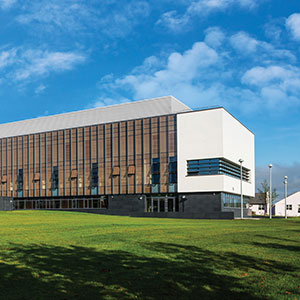
Colleges & Schools
University of Galway has earned international recognition as a research-led university with a commitment to top quality teaching across a range of key areas of expertise.
-
Research & Innovation

Research & Innovation
University of Galway’s vibrant research community take on some of the most pressing challenges of our times.
-
Business & Industry
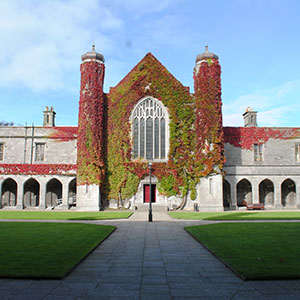
Guiding Breakthrough Research at University of Galway
We explore and facilitate commercial opportunities for the research community at University of Galway, as well as facilitating industry partnership.
-
Alumni & Friends

Alumni & Friends
There are 128,000 University of Galway alumni worldwide. Stay connected to your alumni community! Join our social networks and update your details online.
-
Community Engagement
Community Engagement
At University of Galway, we believe that the best learning takes place when you apply what you learn in a real world context. That's why many of our courses include work placements or community projects.








Neuropharmacology (MSc)
MSc (Neuropharmacology)
Course Overview
Attempting to find new drug treatments central nervous system (CNS) diseases is a major global priority. This requires a collaboration between pharmaceutical companies, hospitals and academic institutions. It involves:
- The identification of drug targets in the CNS disease state of interest
- Discovery and preclinical profiling of substances acting on this drug target
- The clinical evaluation for efficacy and safety.
The Discipline of Pharmacology and Therapeutics has been actively engaged in neuropharmacological research for over 30 years. In 1998, the MSc in Neuropharmacology was introduced to provide students with the skills necessary to develop a career in important area of research.
Programme outcomes include:
- Demonstrating a detailed knowledge of the principles and concepts of neuropharmacology
- Demonstrating an in-depth knowledge of the recent developments and applications in the field of neuropharmacology
- Demonstrating a high-skill level in a wide range of laboratory skills for neuropharmacological investigations
- Communicating experimental findings in neuropharmacology effectively, using a variety of verbal, written and visual means
- Designing, conducting, analysing and presenting their original laboratory‐based research.
Scholarships available
Find out about our Postgraduate Scholarships here.
--
You may also be interested in one of our other Life and Biomedical Sciences postgraduate programmes.
Applications and Selections
Applications are made online via the University of Galway Postgraduate Applications System. Applicants, at the discretion of the selection committee, may be invited to attend for personal interview. Places are limited.
Who Teaches this Course
Requirements and Assessment
A variety of different assessment strategies are used, including written examinations, laboratory practicals and mini-project reports, assignments, data handling computer exercises, experimental reasoning, essays, posters, oral presentations and a research project thesis.
Key Facts
Entry Requirements
Successful students will normally hold at least a Second Class Honours Level 8 degree from any of a range of undergraduate disciplines, from Chemistry to Life Science subjects to Psychology. Students are also considered who have a Level 7 degree and three years’ relevant work experience. IELTS score of 6.5 (with not less than 5.5 in any one component).
Additional Requirements
Recognition of Prior Learning (RPL)
Duration
1 year, full-time
Next start date
September 2024
A Level Grades ()
Average intake
15
QQI/FET FETAC Entry Routes
Closing Date
Please refer to the review/closing date website.
NFQ level
Mode of study
ECTS weighting
90
Award
CAO
Course code
MSC-NP
Course Outline
The programme is divided into three trimesters trimesters (each of 30 ECTS) in the following manner:
Trimester 1
- Neuroscience: 5 ECTS
- Central Neurotransmission: 5 ECTS
- Fundamental Concepts in Pharmacology: 5 ECTS
- Applied Concepts in Pharmacology: 5 ECTS
- Experimental Methods in Pharmacology: 10 ECTS
Trimester 2
- Experimental Neuropharmacology: 15 ECTS
- Current Topics in Neuropharmacology: 10 ECTS
- Neuropharmacology & Therapeutics: 5 ECTS
Trimester 3
Neuropharmacology Research Project: 30 ECTS
Curriculum Information
Curriculum information relates to the current academic year (in most cases).Course and module offerings and details may be subject to change.
Glossary of Terms
- Credits
- You must earn a defined number of credits (aka ECTS) to complete each year of your course. You do this by taking all of its required modules as well as the correct number of optional modules to obtain that year's total number of credits.
- Module
- An examinable portion of a subject or course, for which you attend lectures and/or tutorials and carry out assignments. E.g. Algebra and Calculus could be modules within the subject Mathematics. Each module has a unique module code eg. MA140.
- Optional
- A module you may choose to study.
- Required
- A module that you must study if you choose this course (or subject).
- Semester
- Most courses have 2 semesters (aka terms) per year.
Year 1 (90 Credits)
Required PM208: Fundamental Concepts in Pharmacology
PM208: Fundamental Concepts in Pharmacology
Semester 1 | Credits: 5
This module introduces students to fundamental pharmacological concepts of pharmacodynamics and pharmacokinetics. A combination of lectures, tutorials and workshops will be used.
Learning Outcomes
- describe the main drug targets
- interpret dose response curves for agonists, antagonists, inverse agonists
- calculate molarities, concentrations, volumes required in making solutions
- access and critically analyse and interpret pharmacological data
- describe the processes of absorption, distribution, metabolism and excretion for specific drugs
- explain the effects of different routes of administration on absorption of drugs, and effects of food and drug interactions on drug disposition
- derive pharmacokinetic data and use them to predict clinical properties of drugs
Assessments
- Continuous Assessment (30%)
- Computer-based Assessment (70%)
Teachers
- EILÍS DOWD:
Research Profile |
Email
- MAURA GREALY:
Research Profile |
Email
- JOHN KELLY:
Research Profile |
Email
- DECLAN PATRICK MCKERNAN:
Research Profile |
Email
- UNA RYAN:
Research Profile |
Email
- Andrea Kwakowsky:
Research Profile |
Email
Reading List
- "Pharmacology" by Rang, H.P., Dale, Ritter, Flower & Henderson
Publisher: Churchill Livingstone - "Principles of Pharmacology" by Golan, D.E., et al
- "Lippincott’s Illustrated Reviews Pharmacology" by Harvey, R.A.
Note: Module offerings and details may be subject to change.
Required PM209: Applied Concepts in Pharmacology
PM209: Applied Concepts in Pharmacology
Semester 1 | Credits: 5
This module introduces students to autonomic pharmacology and drug discovery and development. A combination of lectures, tutorials and workshops will be used.
(Language of instruction: English)
Learning Outcomes
- Describe the process of adrenergic and cholinergic neurotransmission including receptors and transporters.
- Relate drug mechanism of action to autonomic neurotransmission
- Describe how new molecular entities are discovered and developed into drug candidates for human clinical trials
- Summarize the clinical trial process including adverse effects
- Derive dose-response curves for agonists and antagonists in the ANS
- Interpret clinical trial data
Assessments
- Continuous Assessment (30%)
- Computer-based Assessment (70%)
Teachers
- EILÍS DOWD:
Research Profile |
Email
- JOHN KELLY:
Research Profile |
Email
- DECLAN PATRICK MCKERNAN:
Research Profile |
Email
- Andrea Kwakowsky:
Research Profile |
Email
Reading List
- "Pharmacology" by Rang, H.P., Dale, Ritter, Flower & Henderson
Publisher: Churchill Livingstone - "Principles of Pharmacology" by Golan, D.E
- "Lippincott’s Illustrated Reviews Pharmacology" by Harvey, R.A
Note: Module offerings and details may be subject to change.
Required SI209: Neurophysiology
SI209: Neurophysiology
Semester 1 | Credits: 5
The module in Neurophysiology will provide students with a knowledge of the function of the brain and spinal cord. Topics covered will include organisation and function of cell of the central nervous system, motor and somatosensory processing, physiology underlying vision, hearing, sleep, learning, emotion, language, hunger, and thermoregulation. Theoretical learning and understanding of will be aided by laboratory practicals investigating the physiology of vision and hearing.
(Language of instruction: English)
Learning Outcomes
- Describe the principles of somatosensory processing and perception and apply this knowledge to explain acute pain processing
- Describe in detail the processes behind spinal reflexes and central control of movement
- Describe the physiological processes underlying vision, hearing, sleep, learning, emotion, language, hunger, and thermoregulation
- Compare knowledge of the normal CNS function and symptoms associated with pathophysiology
- Examine the practical assessment of the physiology of vision and hearing
- Integrate practical information with theoretical knowledge
Assessments
- Continuous Assessment (15%)
- Oral, Audio Visual or Practical Assessment (15%)
- Computer-based Assessment (70%)
Teachers
- KAREN DOYLE:
Research Profile |
Email
- MICHELLE ROCHE:
Research Profile |
Email
- Liza O'Regan:
Research Profile |
Email
Reading List
- "Neuroscience" by Purves et al.
Publisher: Sinauer Associates. ebook platform - "Principles of neural science" by Handel, E.R., Schwartz, J.H. & Jessell, T.M.
Publisher: McGraw Hill
Note: Module offerings and details may be subject to change.
Required PM5101: Central Neurotransmission
PM5101: Central Neurotransmission
Semester 1 | Credits: 5
This module introduces students to the concepts and chemicals involved in neurotransmission. It also provides students with the basis for pharmacological interventions in disorders of the central nervous system.
(Language of instruction: English)
Learning Outcomes
- Describe the major chemicals involved in neurotransmission
- Explain the process of neurotransmission
- Name targets that are used to intervene pharmacologically in CNS disorders
- Identify targets that could potentially be used for pharmacological interventions in disease states
- Describe the biochemical and cellular consequences of neurotransmission
Assessments
- Department-based Assessment (100%)
Teachers
- EILÍS DOWD:
Research Profile |
Email
- JOHN KELLY:
Research Profile |
Email
- DECLAN PATRICK MCKERNAN:
Research Profile |
Email
- Andrea Kwakowsky:
Research Profile |
Email
Note: Module offerings and details may be subject to change.
Required PM5102: Experimental Methods in Pharmacology
PM5102: Experimental Methods in Pharmacology
Semester 1 | Credits: 10
A practical-based module that aims to develop laboratory skills in conjunction with data analysis and interpretation using computer software
(Language of instruction: English)
Learning Outcomes
- Be proficient in lab skills
- Construct graphical representations of data sets
- Interpret experimental data
- Analyse data using the appropriate methods
- Provide rationale for choosing appropriate statistical methods
- Critically evaluate scientific data in the literature
- Create experimental reports based on the analysis of data sets
Assessments
- Department-based Assessment (100%)
Teachers
- JOHN KELLY:
Research Profile |
Email
- DECLAN PATRICK MCKERNAN:
Research Profile |
Email
- Andrea Kwakowsky:
Research Profile |
Email
Note: Module offerings and details may be subject to change.
Required PM5103: Experimental Neuropharmacology
PM5103: Experimental Neuropharmacology
Semester 2 | Credits: 15
This is a practical-based module with the aim of preparing students for their research project. This module consists of mini-projects in topics relevant to neuropharmacology research
(Language of instruction: English)
Learning Outcomes
- Observe and record behavioural changes following drug exposure
- Perform experiments to measure changes in molecular events following drug treatment in cells
- Anaylse, present and derive conclusions from scientific data
- Interpret experimental data
Assessments
- Department-based Assessment (100%)
Teachers
- HOWARD OLIVER FEARNHEAD:
Research Profile |
Email
- DAVID FINN:
Research Profile |
Email
- LINDA HOWARD:
Research Profile |
Email
- DECLAN PATRICK MCKERNAN:
Research Profile |
Email
- AIDEEN RYAN:
Research Profile |
Email
- Miriam Moriarty:
Research Profile |
Email
Note: Module offerings and details may be subject to change.
Required PM5104: Current Topics in Neuropharmacology
PM5104: Current Topics in Neuropharmacology
Semester 2 | Credits: 10
This is a self-directed assignment-based module that aims to develop students' capabilities in data analysis, interpretation and presentation and to familiarise them with recent advances and controversial topics in the field of neuropharmacology.
Learning Outcomes
- . Evaluate the current efficacy and safety information for a named drug at various stages of its development
- Critically analyse the evidence and synthesise an opinion on a controversial topic in neuropharmacology
- Develop a research proposal and design experiments to address a project title
Assessments
- Continuous Assessment (100%)
Teachers
- EILÍS DOWD:
Research Profile |
Email
- DAVID FINN:
Research Profile |
Email
- JOHN KELLY:
Research Profile |
Email
- DECLAN PATRICK MCKERNAN:
Research Profile |
Email
- Andrea Kwakowsky:
Research Profile |
Email
Note: Module offerings and details may be subject to change.
Required PM5105: Neuropharmacology & Therapeutics
PM5105: Neuropharmacology & Therapeutics
Semester 2 | Credits: 5
This is a self-directed & lecturer supervised module designed to further develop knowledge in drugs acting on the nervous system (e.g. psychiatric disorders, neurological disorders, pain and drugs of abuse) as well novel therapies for the nervous system.
(Language of instruction: English)
Learning Outcomes
- Describe and critically discuss the role of CNS neurotransmitters in psychiatric and neurological disease and in reward processes
- Relate mechanisms of drug action to management of psychiatric and neurological disorders
- Critically discuss the contribution that modern approaches to technologies for therapeutics have made (or may make in the future) to human health.
Assessments
- Department-based Assessment (100%)
Teachers
- DAVID FINN:
Research Profile |
Email
- JOHN KELLY:
Research Profile |
Email
- DECLAN PATRICK MCKERNAN:
Research Profile |
Email
- Andrea Kwakowsky:
Research Profile |
Email
Reading List
- "Pharmacology" by Rang, H.P., Dale, Ritter, Flower & Henderson
Publisher: Churchill Livingstone. - "Principles of Pharmacology" by Golan, D.E
- "Illustrated Reviews Pharmacology" by Harvey, R.A
Note: Module offerings and details may be subject to change.
Optional PM517: Pharmacology Thesis
PM517: Pharmacology Thesis
12 months long | Credits: 30
Assessments
- Research (100%)
Teachers
- DECLAN PATRICK MCKERNAN:
Research Profile |
Email
Note: Module offerings and details may be subject to change.
Optional SI503: Physiology Thesis
SI503: Physiology Thesis
12 months long | Credits: 30
Assessments
- Research (100%)
Teachers
- DECLAN PATRICK MCKERNAN:
Research Profile |
Email
Note: Module offerings and details may be subject to change.
Optional BI503: Biochemistry Thesis
BI503: Biochemistry Thesis
12 months long | Credits: 30
Assessments
- Research (100%)
Note: Module offerings and details may be subject to change.
Optional AN508: Anatomy Thesis
AN508: Anatomy Thesis
12 months long | Credits: 30
Assessments
- Research (100%)
Teachers
- DECLAN PATRICK MCKERNAN:
Research Profile |
Email
Note: Module offerings and details may be subject to change.
Optional SY502: Psychiatry Thesis
SY502: Psychiatry Thesis
12 months long | Credits: 30
Assessments
- Research (100%)
Teachers
- DECLAN PATRICK MCKERNAN:
Research Profile |
Email
Note: Module offerings and details may be subject to change.
Optional PM311: Introduction to Toxicology
PM311: Introduction to Toxicology
Semester 1 | Credits: 5
A 5ECTS module developed to provide an introduction to Toxicology to third year science students who have an interest in poisons and a background in Pharmacology, Biochemistry, Physiology, Anatomy or Chemistry. The course involves lectures delivered over one semester and is assessed through continuous assessment and a 2 hour written examination at semester's end.
(Language of instruction: English)
Learning Outcomes
- use the language, terms, and definitions of toxicology
- describe the factors affecting toxic responses
- describe specific mechanisms of toxic action
- apply this knowledge to explain specific examples of target organ toxicity
- describe how toxicity assessed and the challenges of risk assessment
- collect toxicological information and apply toxicological principles to specific classes of toxicant and specific situations
Assessments
- Continuous Assessment (40%)
- Computer-based Assessment (60%)
Teachers
- HOWARD OLIVER FEARNHEAD:
Research Profile |
Email
- DAVID FINN:
Research Profile |
Email
- DECLAN PATRICK MCKERNAN:
Research Profile |
Email
Reading List
- "Casarett & Doull's Essentials of Toxicology" by n/a
Publisher: McGraw-Hill Professional - "Principles of Biochemical Toxicology" by n/a
Note: Module offerings and details may be subject to change.
Optional BI5107: Introduction to Molecular and Cellular Biology
BI5107: Introduction to Molecular and Cellular Biology
Semester 1 | Credits: 5
This module provides a concise introduction to key principles and mechanisms in molecular cell biology. It comprises an overview of cell structure and the cell cycle including mitosis and meiosis, a description of the molecular properties of the major classes of biomolecules, an overview of the principles of genetics and evolution, and an introduction to the mechanisms of replication, transcription and translation including gene regulation and epigenetics.
(Language of instruction: English)
Learning Outcomes
- Outline the structure of animal cells and the cell cycle, including mitosis and meiosis
- Describe how the properties of biological macromolecules contribute to cell function
- Summarise the structure of DNA and chromosomes and how this enables genetics and evolution
- Explain the mechanisms of DNA replication, gene transcription and translation
- Describe the biochemical basis of gene regulation, epigenetics and DNA technologies
Assessments
- Written Assessment (50%)
- Continuous Assessment (50%)
Teachers
- ANDREW FLAUS:
Research Profile |
Email
- KEVIN SULLIVAN:
Research Profile |
Email
- ASHLA WARD:
Research Profile |
Email
Reading List
- "Campbell Biology, Global Edition" by Lisa A. Urry,Michael L. Cain,Steven A. Wasserman,Peter V. Minorsky,Jane B. Reece,Neil A. Campbell
ISBN: 9781292170435.
Publisher: Pearson
Note: Module offerings and details may be subject to change.
Optional PM5114: Screening Molecular Libraries
PM5114: Screening Molecular Libraries
Semester 2 | Credits: 5
The module will provide training in high-throughput and high-content screening technologies to post-graduate students. The course delivers training through a mixture of lectures, practical classes, tutorials, assignments and a training workshop. Students will gain theoretical and practical knowledge of high-throughput and high-content screening and develop proficiency in a range of data analysis techniques. The course will be delivered through the Biomedical Sciences Screening Core Facility at NUI Galway. The facility is fully equipped to deliver all aspects of the course. The course will be open to research MSc students and PhD students in biomedical sciences (College of Science, College of Medicine and other relevant Colleges ) subject to capacity and approval of the Module owner.
(Language of instruction: English)
Learning Outcomes
- Demonstrate a detailed knowledge of the principles and concepts of screening.
- Demonstrate an in-depth knowledge of the recent developments and applications in the field of screening
- Demonstrate a competency in a wide range laboratory skills relevant to high-throughput and high content screening activity
- Identify the key features important when designing new screens,
- Be able to conduct a screen proficiently and to appropriately analyse and summarise screening data.
Assessments
- Continuous Assessment (10%)
- Oral, Audio Visual or Practical Assessment (90%)
Teachers
- HOWARD OLIVER FEARNHEAD:
Research Profile |
Email
- KEVIN SULLIVAN:
Research Profile |
Email
Note: Module offerings and details may be subject to change.
Why Choose This Course?
Career Opportunities
The majority of graduates of the programme have entered the workforce either in technical or research roles within hospitals, universities or companies, mostly in Ireland. In addition, approximately one-third have embarked on PhD research following graduation.
Who’s Suited to This Course
Learning Outcomes
Transferable Skills Employers Value
Work Placement
Study Abroad
Related Student Organisations
Course Fees
Fees: EU
€8,640 p.a. (including levy) 2024/25
Fees: Tuition
€8,500 p.a. 2024/25
Fees: Student levy
€140 p.a. 2024/25
Fees: Non EU
€27,000 p.a. (€27,140 including levy) 2024/25
Postgraduate students in receipt of a SUSI grant—please note an F4 grant is where SUSI will pay €4,000 towards your tuition (2024/25). You will be liable for the remainder of the total fee. A P1 grant is where SUSI will pay tuition up to a maximum of €6,270. SUSI will not cover the student levy of €140.
Postgraduate fee breakdown = Tuition (EU or NON EU) + Student levy as outlined above.
Note to non-EU students: learn about the 24-month Stayback Visa here.