-
Courses
Courses
Choosing a course is one of the most important decisions you'll ever make! View our courses and see what our students and lecturers have to say about the courses you are interested in at the links below.
-
University Life
University Life
Each year more than 4,000 choose University of Galway as their University of choice. Find out what life at University of Galway is all about here.
-
About University of Galway
About University of Galway
Since 1845, University of Galway has been sharing the highest quality teaching and research with Ireland and the world. Find out what makes our University so special – from our distinguished history to the latest news and campus developments.
-
Colleges & Schools
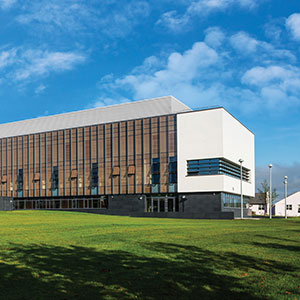
Colleges & Schools
University of Galway has earned international recognition as a research-led university with a commitment to top quality teaching across a range of key areas of expertise.
-
Research & Innovation

Research & Innovation
University of Galway’s vibrant research community take on some of the most pressing challenges of our times.
-
Business & Industry
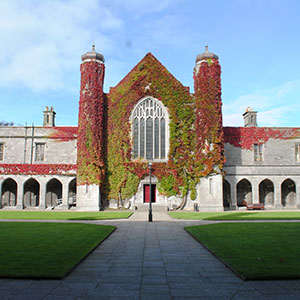
Guiding Breakthrough Research at University of Galway
We explore and facilitate commercial opportunities for the research community at University of Galway, as well as facilitating industry partnership.
-
Alumni & Friends
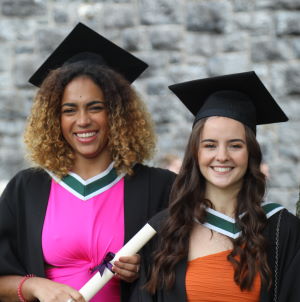
Alumni & Friends
There are 128,000 University of Galway alumni worldwide. Stay connected to your alumni community! Join our social networks and update your details online.
-
Community Engagement
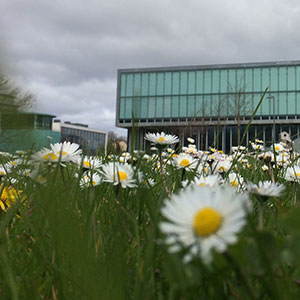
Community Engagement
At University of Galway, we believe that the best learning takes place when you apply what you learn in a real world context. That's why many of our courses include work placements or community projects.








Electrical & Electronic Engineering (Structured PhD)
(Structured PhD) Electrical & Electronic Engineering—full-time and part-time
Course Overview
The Structured PhD, full-time, is a 4-year programme which offers added value to the core component of doctoral training. Students on this programme are offered disciplinary or dissertation specific modules, as well as generic and transferable skills designed to meet the needs of an employment market that is wider than academia.
The programme is flexible and student centred, as candidates choose their own pathways in consultation with their Supervisor and Graduate Research Committee.
Programmes Available
PhD (full-time, four years); applications are made online via the University of Galway Postgraduate Applications System.
- New entrants may register for the programme from September to March each year
The thesis remains central to the award of the PhD and is weighted at 330 ECTs. - Students select appropriate skills modules in consultation with their Supervisor and/or Postgraduate Research Committee as follows: At least 10 ECTs in two of the three skills categories, and an overall total of at least 30 ECTs
Skills Categories: (i) Problem Based Learning; (ii) Publication/Dissemination; (iii) Formal Training (from a range of Discipline-specific, Interdisciplinary and Generic modules)
Associated
Learning Outcomes
Entry Requirements
PhD—high Honours standard in the primary degree.
Who’s Suited to This Course
Current research projects
- Car-based detection of pedestrians at night-time using imaging techniques
- Treatment of venous leg ulcers using Neuromuscular Electrical Stimulation
- Using web technologies and social networking to improve adherence to exercise
- Development of a leadless cardiac pacing device
- Reconfigurable low power scalable hardware neural network for self repairing system
- Research into transport delay in VoIP systems
- DSP algorithm for mobile digital health
- Advanced biometric recognition and matching techniques
- Battery management in renewable energy applications
Current funded research opportunity
Work Placement
Related Student Organisations
Career Opportunities
Find a Supervisor / PhD Project
If you are still looking for a potential supervisor or PhD project or would like to identify the key research interests of our academic staff and researchers, you can use our online portal to help in that search
Research Areas
- Biomedical Engineering
- Exercise Engineering
- Ambient assisted Living
- Biomedical Electronics
- Rehabilitation Engineering
- Cardiovascular Electronics
- Medical Imaging
- Automotive Electronics
- Diagnostic & Therapeutic Engineering for Cancer
- Communications
- Power Electronics
- Energy Conversion
- Bio-inspired Electronics
- Reconfigurable Computing
- Embedded Systems
- Web Technologies
Researcher Profiles
Prof. Gearoid O Laighin
Rehabilitation Engineering Science and Vascular Electronics. Ambient Assisted Living, Exercise Engineering, Biomedical Electronics, Rehabilitation Engineering Science and Vascular Electronics.
Dr. John Breslin
Social Semantic Web and integrating the Web with electronic devices / sensor systems.
Dr. Peter Corcoran
Embedded Systems, Multimedia Home Networking, Digital Imaging, Biometrics, Wireless and Powerline Networking.
Dr. Maeve Duffy
Magnetic component design, Wearable power generators, Wireless powering, Sensors.
Prof. Gerard Hurley
Electromagnetics, Power Electronics, and Renewable Energy.
Dr. Martin Glavin
Digital Signal Processing and Embedded Systems for automotive and biomedical applications.
Dr. Edward Jones
Digital Signal Processing, with applications in speech and audio processing, image processing, and biomedical engineering.
Liam Kilmartin
Speech and Audio Processing, Fixed and Mobile Network Modelling, Bio-signal processing, Application of Machine Learning Algorithms.
Dr. Fearghal Morgan
Evolvable Hardware, in particular Network on Chip (NoC)-based Hardware Spiking Neural Networks (SNNs). Genetic and Evolutionary computation, Reconfigurable Computing technology, applications and FPGA IP security.
Course Fees
Fees: EU
€5,750 p.a. (€5,890 including levy) 2024/25
Fees: Non EU
€15,000 p.a. (€15,140 including levy) 2024/25
Extra Information
EU Part time: Year 1 €4,250 p.a. (€4,390 including levy) 2024/25
All students, irrespective of funding, must pay the student levy of €140.
Contact Us
Ms. Mary Costello, Administrator,
Electrical & electronic Engineering,
University of Galway
T: +353 91 492 728
E: mary.costello@universityofgalway.ie
Related links:
 Scholarships
 Research
 Graduate Studies Office
What Our Students Say
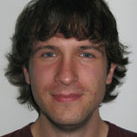
Barry Broderick | PhD (Bioelectronics)
Pursing a PhD in Bioelectronics at NUI Galway has been an extremely rewarding experience and enabled me not only to develop to an advanced level the skills acquired during my undergraduate degree but also to develop a completely new set of skills and expertise. In my case I needed anatomical and physiological knowledge to enable me to apply my engineering expertise to develop effective and novel systems for the prevention of post-operative DVT